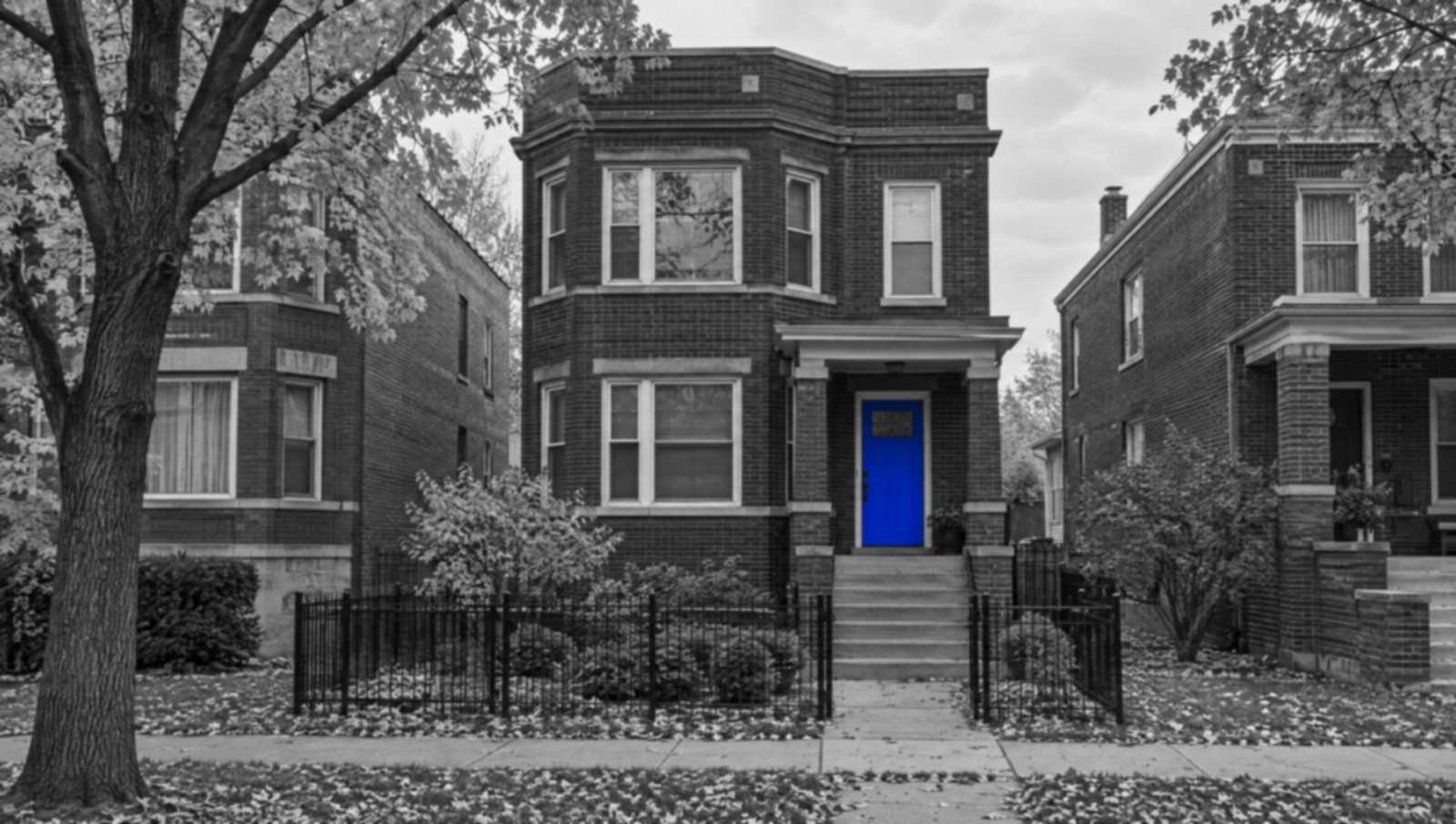
What is the Cook County property fraud alert?
It's a free warning service run by the Cook County Clerk's Office in Illinois. You sign up with your property's PIN. Each time a document is recorded against that PIN, the Clerk's system calls you, emails you, or both1,2.
The Clerk handles Cook County recordings, which means it files deeds, mortgages and liens (claims for money owed on a property) in the public record. Its Property Fraud Unit runs the alert and looks into suspicious filings1.
- Deed
- The signed paper that passes a property from one owner to the next.
- Title
- Your legal right to own the property. Recorded deeds are the public proof of it.
- Recording
- Filing a document with the county so it becomes part of the public record.
- PIN
- Property Index Number. Cook County's 14-digit number for each parcel of land, printed near the top of your property tax bill.
- Chain of title
- The list of every recorded deed and loan on a property, from owner to owner.
This page is about Cook County, Illinois. Cook County, Minnesota, announced its own free "Document Alert" in October 2026. That is a different county with a different sign-up16.
Where did the Cook County Recorder of Deeds go?
It merged into the Cook County Clerk's Office. Voters approved the merger in 2016, and the Recorder of Deeds office closed on Dec. 7, 202012.
Cook County Clerk recordings today
The Clerk now runs recording, the Property Fraud Unit and the alert1. The unit works from Room 120 at 118 North Clark Street in downtown Chicago3.
Many old articles still point to the Recorder era. A 2013 notice sent owners to cookrecorder.com, and a 2013 post named cookcountypropertyfraudalert.com10,17.
How do I sign up for the Cook County Clerk fraud alert?
Fill in the Clerk's online form with your name, PIN and address, then choose email, phone or both. The form is on the Clerk's Recordings site. There is no fee2,3.
- Find your 14-digit PIN. It is near the top of your property tax bill3. The sign-up page also links to cookcountypropertyinfo.com to look it up2.
- Open the sign-up page. Go to crs.cookcountyclerkil.gov/public/pfa/signup.
- Enter your name. Put your last name first, or use the business name2.
- Enter the PIN and property address. Condo owners must include the last 4 digits of the PIN. Use "Add Additional Property" for each other property you own in the county2.
- Add an email, a phone number or both. The Clerk sends an alert to every contact you give2.
- Check every detail, then click "Create Fraud Alert." The page warns that you "CANNOT change your information" after you click2.
- Look for the confirmation email. Check your junk or spam folder. Add clerk.RecordsFraud@cookcountyil.gov to your safe senders2.
A Cook County PIN has 14 digits, written in five groups:
Signing up on paper or for a parent
You can also sign up by mail, by email or at the counter. Use the Clerk's "Free Property Fraud Alert Registration" form. Send it to the Property Fraud Unit, 118 North Clark Street, Room 120, Chicago, IL 60602, or email it to clerk.recordsfraud@cookcountyil.gov3.
The paper form has a box for "Relative of Owner." The Clerk says the alert can cover "the property of a loved one"1,3. That makes it a simple way to watch an older parent's home.
A real estate agent, attorney, closing agent or title company can also sign you up. They use a separate form, which you sign too, listing up to three people to receive alerts4. The form says owners "are not required to register" and that "registering is free of charge"4.
What does the Cook County alert miss?
It tells you after a document is recorded, and only for the PIN you entered. The Clerk calls it "a notice of recordation, not a freeze on title"2.
No paid service can do more on that point. In 2017, the Cook County Recorder warned that under Illinois law, "homeowners are not able to 'lock' or 'freeze' the title of their home"11.
- It doesn't stop a filing. County recorders are "not authorized by law to review the legal claims made in documents before recording them"10.
- It doesn't remove a fake deed. The Clerk says the owner must "petition the court, at their own expense," to get it removed1.
- It only watches the PIN you typed. A wrong PIN means "you will not receive an alert"2.
- It can't be edited later. If your details are wrong, you sign up again2.
- It isn't a promise. The Clerk's form says the office is "not responsible for any PIN errors." Illinois law also says no county is liable for a missed alert, except for "willful and wanton misconduct"3,5.
- It doesn't cover other counties. Own a home in DuPage, Will or McHenry too? Sign up there as well.
How Cook differs from the collar counties
Cook's alert watches a PIN. Many nearby counties watch a name instead. McHenry and Will counties use the national Property Fraud Alert service, which alerts you when a document with your name is recorded14,15.
| Cook County (Clerk) | McHenry and Will counties | |
|---|---|---|
| Watches | The PIN you enter | The names you enter |
| Alerts by | Email, phone call or both | Email, text or voice call (pick one per sign-up) |
| Sign up | crs.cookcountyclerkil.gov | propertyfraudalert.com or 1-800-728-3858 |
| Cost | Free | Free |
Sources: Cook County Clerk2, McHenry County14, Will County Recorder15, pages read October 13, 2026.
How have deed thieves targeted homes in Cook County?
Recent cases here involve a forged deed after an owner died and an empty house listed by an impostor. In both, the real owner found out after strangers had already acted.
These schemes aren't new to Cook County. In 2013, an older woman called the Recorder's fraud unit while a man was rekeying her doors. Staff spotted a likely fake filing on her chain of title and called Chicago police, who stopped him from forcing her out10.
"I like to tell people that it's easier to steal a house than it is to steal a car."
Who gets targeted? The Clerk warns that fraudsters target "paid-for homes that have no mortgage"1. For the warning signs, see how seller impersonation fraud works.
What changed in Illinois deed fraud law in 2026?
Since Jan. 1, 2026, every Illinois county must run a property fraud alert and a fraud review, and owners can sue a fake deed's filer. Public Act 104-382, passed as Senate Bill 1523, made all three changes5.
- July 2013A new law lets a recorder send a suspected fake filing to an administrative law judge, a hearing officer who rules outside regular court. Cook's Recorder wrote it10.
- Jan. 2014Filing a claim on someone's title that you know has no legal basis becomes a crime, "unlawful clouding of title"6.
- Jan. 2016Real estate professionals may sign owners up for alerts5.
- Jan. 2026Every county must offer an alert and a fraud review. Owners gain a right to sue5.
Sources: Illinois General Assembly5,6, Patch10.
The bill's sponsor, Sen. Doris Turner of Springfield, said: "People work hard to be able to say they own a property in their name"13.
What the right to sue covers: anyone who "knowingly files or causes to be filed" a fraudulent deed can be held liable to the rightful owner in court5. A lawyer can tell you whether it fits your case.
What should I do if a fake deed is recorded on my Cook County home?
Report it to the Clerk's Property Fraud Unit, file a police report, and talk to a lawyer about getting a judge to rule on it. The Clerk's staff will "help research the problem and coordinate a law enforcement response where indicated"1.
- Get a copy of the document. Look up your PIN in the Clerk's online recordings and note the document number.
- Email the Property Fraud Unit. Write to clerk.RecordsFraud@cookcountyil.gov with your PIN and the document number1.
- File a police report. Call the police department where the property is. Don't confront the person yourself7.
- Ask about fraud referral and review. The Clerk can send the filing to an administrative law judge. You confirm in writing that you believe it's fraud and ask for the referral, and the hearing must be held within 30 days5.
- Talk to a lawyer about court. You don't have to use the judge review; you can go to court instead. A lawsuit asking a judge to declare who owns the home is called a quiet title action5.
- Call your title insurance company. Your policy may pay for your defense7.
If the judge finds "clear and convincing evidence" of fraud, the Clerk records the ruling within 5 business days. The fake document then "shall not be considered to affect the chain of title of the property in any way"5.
Our full guide covers each step in order: what to do if a fraudulent deed is filed.
Who do I call about deed fraud in Cook County?
Start with the Clerk's Property Fraud Unit, then the police. The unit's office is in the Clerk's downtown building at 118 North Clark Street3.
| Who | What for | How to reach them |
|---|---|---|
| Cook County Clerk, Property Fraud Unit | Alerts, suspicious filings, fraud review | clerk.RecordsFraud@cookcountyil.gov. 312-603-5050. 118 North Clark Street, Room 120, Chicago ³ |
| Local police | A criminal report | The department where the property is. Call 911 in an emergency |
| A real estate lawyer | Court cases and the right to sue | Free help may be available through Illinois Legal Aid Online ⁷ |
| Your title insurance company | A claim on your policy | The phone number on your policy ⁷ |
Frequently asked questions
Is the Cook County property fraud alert free?
Yes. The Clerk's sign-up page calls it the "Free Property Fraud Alert." Its form for real estate professionals says "registering is free of charge."
Is there a Cook County property fraud alert app?
No app is listed on the Clerk's pages. You sign up on the Clerk's website or with a paper form. Alerts come as a phone call, an email or both.
Is Property Fraud Alert legit?
Yes. Property Fraud Alert at propertyfraudalert.com is the free service that McHenry, Will and other Illinois counties link to from their official sites. Cook County doesn't use it; Cook's own alert is on the Clerk's site, crs.cookcountyclerkil.gov.
Can you sue someone for recording a false deed in Illinois?
Yes. Since Jan. 1, 2026, Illinois law lets the rightful owner sue anyone who knowingly files a fraudulent deed, and the court can order "legal or equitable relief." Talk to a lawyer about what you could recover.
What is the penalty for deed fraud in Illinois?
Filing a claim on someone's title that you know has no legal basis is "unlawful clouding of title." A first offense is a misdemeanor if the claim is worth $10,000 or less, and a felony above that or for a second offense. Prosecutors can also bring charges like forgery and theft, as in the 2026 Burbank case.
Can I sign up for an alert on my parent's house?
Yes. The Clerk's paper form has a "Relative of Owner" box, and the Clerk says the alert can cover a loved one's property. You need the home's PIN and address.
Sign up with your PIN today
The Clerk's alert is free and takes a few minutes. Have your tax bill ready for the PIN. Then see what a recorded notice adds.
Sign up for the Cook County alertSee how Still My Home worksWant to check the free alert in another county? See which counties offer free property fraud alerts, or read how property fraud alerts work in general.
Sources
- Property Fraud Unit, Cook County Clerk's Office, checked October 13, 2026
- Create a Property Fraud Alert (sign-up page), Cook County Clerk's Office, checked October 13, 2026
- Free Property Fraud Alert Registration (form), Office of Cook County Clerk Monica Gordon, revised December 2, 2024
- Real Estate Professional's Client Alert Registration (form), Office of Cook County Clerk Monica Gordon, revised October 2, 2025
- Public Act 104-0382 (SB 1523), Illinois General Assembly, effective January 1, 2026
- 720 ILCS 5/32-13, unlawful clouding of title, Illinois General Assembly, checked October 13, 2026
- How property owners can protect against fraud, Illinois Legal Aid Online, reviewed September 19, 2025
- Teen charged with forging deed, selling Burbank home, Bob Bong, Southwest Regional Publishing, February 11, 2026
- Property owner says house he owned was listed for sale without his consent, Charlie De Mar, WBBM-TV (CBS News Chicago), via CNN Newsource, July 9, 2025
- CCRD helps stop home theft in progress, John Mirkovic (community post), Patch, September 17, 2013
- Cook County Recorder issues consumer warning regarding Home Title Lock services, Village of River Forest, October 26, 2017
- Cook County Recorder of Deeds, Wikipedia, checked October 13, 2026
- Turner measure to combat deed fraud passes Senate, Illinois Senate Democratic Caucus, April 11, 2025
- Property Fraud Alert, McHenry County Recorder, checked October 13, 2026
- Property Fraud Alert, Will County Recorder of Deeds, checked October 13, 2026
- Document Alert now available in Cook County to help detect fraud, Holly Schroeder, Cook County (Minnesota) Recorder, October 2026
- Protect your property against fraud with new alert system, Morgan Delack, Patch, July 18, 2013