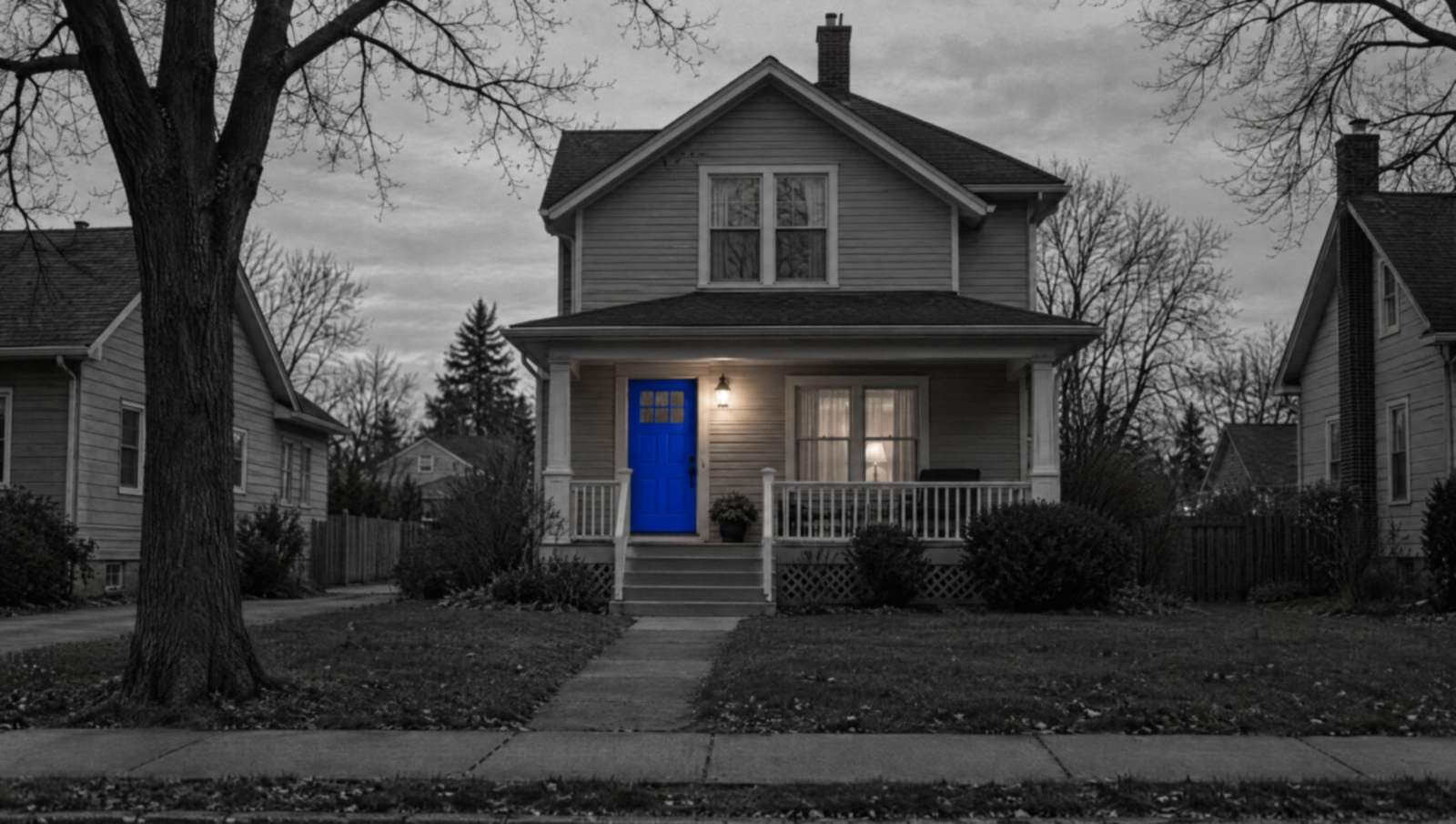
Deed theft is when a criminal takes your home on paper. They file a fake deed with your county that moves the home into their name. Then they try to sell it, borrow against it or rent it out.
You still live there, and your keys still work. But the public record says someone else owns it. Most owners will never face this. Still, the attempts are rising, and a few free steps make you much harder to target.
This guide explains what deed theft means, how it happens step by step, who gets targeted, and what to do about it.
What is deed theft?
Deed theft, also called home title theft or deed fraud, is the taking of a home's title without the owner's knowledge or approval. New York's Attorney General describes two main ways it happens:
- Forgery: a thief fakes your signature on a deed and files it with the county.
- Fraud: you are tricked into signing your deed over, often by someone promising help with a loan or debt.
A few words come up again and again. Here is what they mean.
- Deed
- The legal paper that moves a property from one owner to another.
- Title
- Your legal right to own the property. The deed is the paper; the title is the right.
- County recorder
- The local office that files deeds and mortgages in the public record. Some places call it the clerk or register of deeds.
- Quitclaim deed
- A short deed that hands over whatever share of a property the signer owns, with no promises about the title. Thieves like it because it is simple.
- Notary
- A person licensed to check a signer's ID and witness a signature. Thieves often fake notary stamps.
Deed theft is different from someone breaking into your home. Nothing is taken from the house. What is taken is the record of who owns it.
How does deed theft happen?
Most deed thefts follow the same five steps. The FBI's Boston office says scammers "comb through public records" to find property, then forge documents "to record a phony transfer of property ownership."
- Pick a target. Search public records for property no one is watching: vacant land, homes with no mortgage, homes whose owner lives far away or recently died.
- Collect your details. Gather your name, signature, birth date and other details from public records, data brokers or data breaches. Some make fake IDs.
- Fake the deed. Forge your signature on a deed, often a quitclaim deed, with a fake notary stamp. Or pose as you to a real estate agent or title company.
- File it with the county. Record the fake deed. The county files it as long as the form is filled in correctly. It does not check whether your signature is real.
- Cash in. Sell the home to a buyer who doesn't know, take out a loan against it, or rent it out to tenants.
Step 4 surprises most people. Recording offices file papers; they don't judge them. The Harris County Clerk in Texas says plainly that even its own fraud alert "does not prevent the recording of a real property instrument." So a fake deed can sit in the record until someone notices it.
A growing version skips the forged deed at first. In seller impersonation, a criminal poses as the owner and asks a real agent to list the property. The FBI warned in June 2026 that thieves use fake IDs, new email accounts and internet phone numbers to sell vacant lots this way.
Criminals now use new tools too. In ALTA's 2026 survey, 58% of title firms said deepfakes (faked photos, video or voices) are at least somewhat common in these schemes.
Sometimes the thief is close to home. The FBI also lists family members and close associates who talk an older relative into signing a home over "for their own financial gain."
How common is deed theft?
Deed theft is rare for any one home, but attempts are rising. No national agency counts stolen deeds on their own. The FBI puts them in a wider group called real estate fraud, which also covers rental and timeshare scams.
deeds a year are flagged as possibly fake in Franklin County, Ohio, out of about 50,000 home titles the county processes.
Source: Franklin County Deed/Title Fraud Strike Force report, April 4, 2024
Reported losses are climbing. In 2025, 12,368 people reported real estate fraud to the FBI and lost $275.1 million. That is up 58% from $173.6 million in 2024.
Real estate fraud losses rose 58% in 2025
Losses reported to the FBI's Internet Crime Complaint Center, in millions of dollars
Show the numbers
| 2023 | $145.2M |
|---|---|
| 2024 | $173.6M |
| 2025 | $275.1M |
Source: FBI Internet Crime Complaint Center, 2025 Internet Crime Report. Covers all real estate fraud, not only deed theft.
Title companies see more attempts too. In a 2026 survey, 59% of title firms had seen someone try to sell a property by posing as its owner. In 2024, it was 28%. The survey was by the American Land Title Association (ALTA). Firms catch most attempts before closing, but some get through.
The real number is likely higher. The FBI says many victims "don't know where to report it, are embarrassed, or haven't yet realized they have been scammed."
Who do deed thieves target?
Thieves pick property where no one is watching. Title firms rate vacant land as the most common target, followed by homes whose owners live elsewhere and homes with no mortgage.
Vacant land is the top target for deed thieves
Share of title firms rating each type at least somewhat common in seller impersonation fraud
Show the numbers
| Vacant land | 82% |
|---|---|
| Owner lives elsewhere | 72% |
| No mortgage | 68% |
| Owner recently died | 55% |
| Vacation home | 51% |
| Rental property | 48% |
| Main home | 25% |
Source: American Land Title Association, Seller Impersonation Fraud Study, September 14, 2026. Survey of 245 title professionals. The study rates property types and owner types separately; both are shown here.
Older owners lose the most. People 60 and older filed 20% of real estate fraud complaints to the FBI in 2025, but reported 45% of the money lost: $123.7 million.
Some owners are targeted more than others. New York City's Department of Finance says anyone can be a victim, but "seniors, immigrants, and people of color are most at risk." Thieves also look for inherited homes. New York's Attorney General warns about homes where the owner has died and the heirs have not put the title in their own names.
What are the warning signs of deed theft?
The first sign is often something that stops arriving. Bills that stop coming can mean someone changed your mailing address. Watch for these:
- Your property tax bill, water bill or other utility bill stops coming.
- A utility bill on an empty home suddenly goes up.
- You get mail about a loan, mortgage or sale you never started.
- Your credit report shows a loan or credit check you don't recognize.
- You get a default or foreclosure notice when your payments are up to date, or when you have no mortgage at all.
- A county or city letter arrives addressed to a "new owner."
- Strangers, agents or buyers ask about a sale you never planned.
- Your county record shows a deed or mortgage you never signed.
One sign doesn't prove a theft. A missing bill is usually just a mail problem. But check your county record if you see any of these. Our checklist of 9 warning signs of home title theft explains what each one can mean.
How can you protect your home from deed theft?
No service can stop a fake deed from being filed. What you can do is make your home harder to target and find a fake deed fast. Start with the free steps.
- Sign up for your county's free alert. Many counties email or text you when a document is recorded in your name. The FBI tells owners to ask their county recorder or clerk whether it offers one. See how the free Property Fraud Alert works.
- Check your property record once a year. Search your county recorder's website for your name or address. Make sure the last deed is the one you signed.
- Keep your mailing address current. Make sure the tax office and assessor have your right address, so you notice if bills stop.
- Check your owner's title insurance. The FBI notes that some policies cover forgery after you buy, including the legal costs of getting your home back. Find your policy and read what it covers.
- Freeze your credit. A freeze stops anyone, including you, from opening new credit in your name until you lift it. The FTC says it's free and doesn't affect your credit score. Place it with all three bureaus: Equifax, Experian and TransUnion. It helps most against loans taken out in your name.
- Keep your will and deed up to date. New York City tells owners to make sure their will says who inherits the home, and to update the deed after someone inherits it. Talk to family or a lawyer before adding or removing anyone from a deed.
- Ask someone to watch an empty property. If a home or lot sits empty, have a neighbor or manager check it and call you about signs, lockboxes or strangers.
Our guide to protecting your home title for free covers each step in detail.
Paid services fall into two groups. Monitoring services watch county records and tell you when something is filed. The Federal Trade Commission warns that so-called "title lock" products are "not a lock, not insurance" and that "you'd only find out AFTER your title got transferred." A recorded notice works differently: it puts a warning on the public record before anyone tries a sale.
| Option | Cost | What it does | What it can't do |
|---|---|---|---|
| County fraud alert | Free | Emails or texts you when a document is recorded in your name | Warns only after filing; misses name spellings it doesn't match |
| Checking your record | Free | Shows every deed and mortgage on your home | Only works when you remember to look |
| Owner's title insurance | Already paid, if you have it | May cover forgery losses and legal costs | Doesn't warn you or stop a filing |
| Paid monitoring | Monthly fee | Watches records and alerts you | Warns only after filing, like the free alert |
| Recorded notice | Varies | Warns buyers and lenders on the record to check with you | Can't stop a fake deed being filed |
For a fuller comparison of paid options, see home title protection: what works.
What should you do if your deed is stolen?
Act fast, and get a lawyer. Only a court can cancel a fake deed, and the sooner you start, the less the thief can do with your home.
- Get a copy of the fake deed. Download or order it from your county recorder. Note the date, names and notary on it.
- Report it to the police. File a report with local police and, if your state has one, the Attorney General's office. Ask for a copy of the report.
- Report it to the FBI and the FTC. File a complaint at ic3.gov. The FBI says it can sometimes stop a wire transfer if it hears within 72 hours. Then report the identity theft at IdentityTheft.gov, the FTC's site, to get a recovery plan.
- Call a real estate lawyer. A lawyer can file a court case to cancel the deed and clear your title. In New York, the Homeowner Protection Program gives free legal help at 855-466-3456.
- Tell your county, your lender and your insurer. Let the recorder, the tax office, your mortgage lender and your title insurer know. Palm Beach County's clerk says acting fast with your title insurer "can help limit the damage."
It can be undone. A Houston couple forged papers to put 40 homes in their names. In 2025, a Harris County, Texas, court gave all 40 back to their rightful owners. Our step-by-step guide to what to do if a fraudulent deed is filed covers the court process and who to call.
Frequently asked questions
Can your home be stolen if you have a mortgage?
Yes. Homes with no mortgage are a more common target: 68% of title firms rate them at least somewhat common in seller impersonation fraud. But a thief can still forge a deed on a home with a mortgage, or take out a new loan in your name. Watch your loan statements and credit report as well as your county record.
How do you know if your home title has been stolen?
Search your county recorder's records for your name or address and look for a deed or mortgage you never signed. Other signs are tax or utility bills that stop coming, mail about a loan you never took, and strangers asking about a sale. A free county alert can email you when a document is recorded in your name.
What is the best way to protect your home from title theft?
Start with the free steps: sign up for your county's fraud alert, check your property record once a year, and keep your mailing address current. Find your owner's title insurance policy and see whether it covers forgery. If a property sits empty, ask someone to check on it.
Is Home Title Lock legit?
Home Title Lock is a real company that sells a monitoring service. The FTC warns that such "title lock" products don't lock your title or stop a fake deed; they tell you after a document is filed. Many counties offer a similar alert for free, so check yours first.
Does putting your house in a trust protect it from deed theft?
No. A trust changes who holds the title, but a thief can still forge the trustee's signature, and the county still records the deed. If your home is in a trust, register the trust's name with your county alert too. Palm Beach County, Florida, for example, tells owners to register a trust as a business name.
How does deed theft happen in New York?
The same two ways as elsewhere: forged deeds and owners tricked into signing. New York made deed theft its own crime on July 19, 2024, and the Attorney General can now prosecute it. New Yorkers can report it to the Attorney General at 1-800-771-7755.
See what your county record says
Look up your property today and sign up for your county's free alert. Then see whether a recorded notice that tells buyers and lenders to check with you makes sense for your home.
See how Still My Home worksFree steps firstSources
- Deed theft, New York Attorney General, checked October 13, 2026
- FBI Boston Warns Quit Claim Deed Fraud is on the Rise, FBI Boston Field Office, April 1, 2025
- Protect Your Property from Illegal Sales Through Parcel Owner Impersonation (I-061626-PSA), FBI Internet Crime Complaint Center, June 16, 2026
- 2025 Internet Crime Report, FBI Internet Crime Complaint Center, 2026 (real estate complaints and losses, all ages and people 60+)
- Seller Impersonation Fraud Study, American Land Title Association, September 14, 2026
- 2024 Deed/Title Fraud Strike Force Report & Recommendations, Franklin County, Ohio, April 4, 2024
- Property Deed Fraud, Harris County Clerk's Office, Texas, checked October 13, 2026
- Home title lock insurance? Not a lock at all, Larissa Bungo, Federal Trade Commission, August 26, 2024
- Attorney General James Announces Conviction of Leader of Queens Deed Theft Ring, New York Attorney General, July 12, 2024
- Harris County Attorney Christian D. Menefee secures judgment returning 40 properties in forgery scheme, Harris County Attorney's Office, September 4, 2025
- Attorney General James Announces New Protections Against Deed Theft, New York Attorney General, July 19, 2024
- Property Fraud Alert, Palm Beach County Clerk of the Circuit Court & Comptroller, checked October 13, 2026
- Deed Fraud Alert! Protect Your Property from Deed Fraud, NYC Department of Finance, checked October 13, 2026
- What To Know About Credit Freezes and Fraud Alerts, Federal Trade Commission, August 2025
- IdentityTheft.gov, Federal Trade Commission, checked October 13, 2026