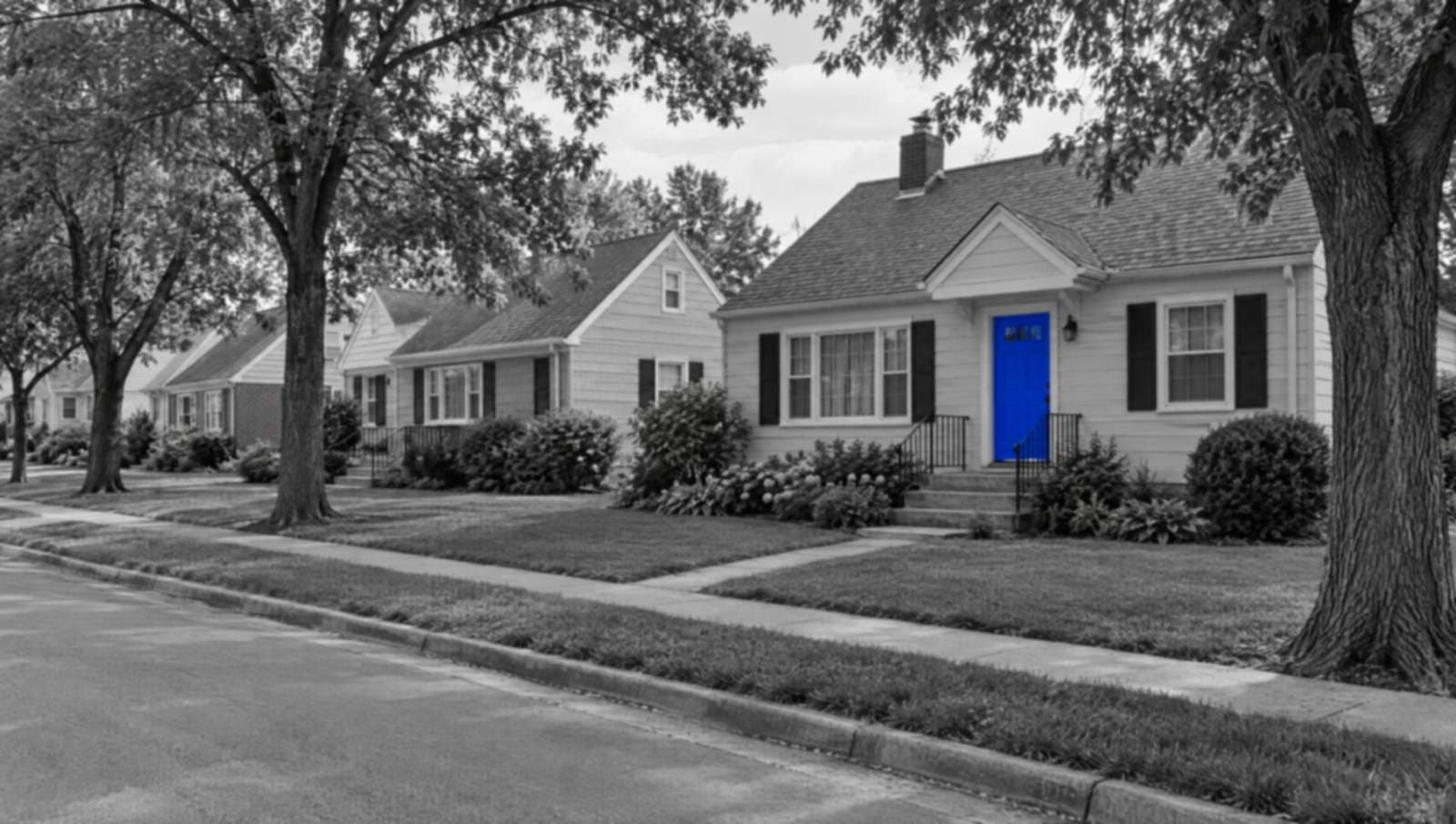
Is home title theft a real problem?
Yes. It happens, and courts and prosecutors have the cases to prove it. In home title theft, a criminal forges your name on a deed or poses as you. The goal is to move your home into someone else's name. A deed is the signed paper that passes a property to a new owner. Your title is your legal right to own it.
Then the thief sells the home or borrows against it. You can read how it works step by step in our guide to deed theft.
It's also less common than the ads suggest. A Dallas County prosecutor put it plainly at a Texas Senate hearing in 2025.
"In the scope of all the land and houses and properties in the state of Texas, it's a small number. But it is a growing number and it's particularly devastating to the victims."
Small, growing and hard on victims. That's the honest picture, and the numbers below back it up.
How often does home title theft happen?
No one knows the exact number, because no national agency counts home title theft on its own. The FBI doesn't track it separately, Money Talks News reported in July 2026.
The FBI does count online "real estate fraud." That bucket is much wider than title theft.
victims reported online real estate fraud to the FBI in 2025, with more than $275 million lost.
Source: FBI Internet Crime Complaint Center, via NAR, April 13, 2026. This count also includes rental and timeshare fraud, so it is not a count of stolen titles.
One expert's guess is about 10,000 cases a year. David Fleck, a California fraud lawyer, gave that estimate to Money Talks News. He based it on talks with people in the real estate business, not on official records.
For scale, the US has about 87 million homes lived in by their owners, the Census Bureau says. If the 10,000 guess is right, that's roughly 1 case for every 8,700 owned homes a year. The true risk for a home you live in is likely lower, because many cases involve land and rentals.
What do the home title theft numbers really count?
Each source measures something different, so read them carefully. Some count victims of a wider crime. Others count how many companies saw an attempt.
| Source | What it counts | Latest number | Title theft only? |
|---|---|---|---|
| FBI (2025) | Victims of online real estate fraud, including rentals and timeshares | 12,368 victims | No |
| ALTA title industry survey (2026) | Title firms that saw at least one attempt to sell by posing as the owner | 59% of firms | No, it counts attempts, not thefts |
| NAR survey (2025) | Realtor groups that knew of deed or title fraud in their area | 63% of groups | Yes |
| Expert estimate (2026) | One lawyer's guess at yearly US cases | About 10,000 | Yes, but not measured |
Sources: FBI IC3 via NAR, April 13, 2026; American Land Title Association (ALTA), September 14, 2026; National Association of Realtors (NAR), 2025; Money Talks News, July 30, 2026.
The trend is clearer than the total. In ALTA's 2026 study, 59% of title firms saw at least one seller impersonation attempt in 2025. In the 2024 study, it was 28%. Seller impersonation means a criminal poses as the owner to sell a property.
Those are attempts, not completed thefts. The same firms said they catch 87% of fraud during their title review.
Is home title theft common for homes like yours?
It depends on the property. Criminals mostly go after land and homes where the owner isn't around. Title firms named the home you live in least often.
Title firms see primary homes targeted least often
Share of title firms that rated each property type at least somewhat common in seller impersonation fraud
Show the numbers
| Vacant land | 82% |
|---|---|
| Vacation home | 51% |
| Rental property | 48% |
| Farm land | 36% |
| Primary home | 25% |
Source: American Land Title Association, 2026 Seller Impersonation Fraud Study, September 14, 2026 (245 title firms). Commercial property, at 13%, is left out of the chart.
Realtors see the same pattern. In NAR's 2025 survey, 52% of the deed and title fraud cases involved residential land. Only 12% involved homes where the owner lived. NAR notes its sample was small, so treat these as rough guides.
The owner matters too. In ALTA's 2026 study, title firms rated these owners at least somewhat common targets:
- Absentee owners, who don't live at the property: 72% of firms.
- Owners with no mortgage on the property: 68%.
- Owners who recently died: 55%.
Why will most homeowners never be victims?
Thieves need a property nobody is watching, and most homes have someone watching. If you live in your home, you get its mail, its tax bills and its visitors. A stranger trying to sell it is more likely to be noticed.
Thieves also need someone to pay them. A buyer or lender has to hand over money, and title companies check the paperwork first. That review is where firms say they catch 87% of fraud.
Being rare doesn't mean it can't happen. A mortgage doesn't stop a fake deed from being recorded, and primary homes still show up in the data. That's why a few free checks are worth it for everyone.
Are you at higher risk of home title theft?
You're at higher risk if your property matches the targets above. Check any line that fits you.
- You own vacant land, or a lot you plan to build on later.
- You own a second home or vacation home that sits empty part of the year.
- You rent out a property and don't live there.
- You own the property outright, with no mortgage.
- You live far away from a property you own and rarely visit it.
- You're handling the home of someone who recently died, such as a parent's house.
Checked none? Your risk is low, and free steps are likely all you need. Checked one or more? Keep reading.
When is paying for home title protection worth it?
Start with the free steps. Pay only if they leave a real gap for your property. The FTC says you can check your title for free with your local land records office. Some counties also send free alerts when a document is recorded in your name.
Our guide shows how to protect your home title for free in 6 steps. Watch for the 9 warning signs of home title theft, too.
Monitoring alone adds little where the county alert is free. First American, a large title insurer, says such services "offer little value since many counties offer a similar monitoring service free of charge."
Paying can make sense when:
- You checked a box above, like land, a rental or a second home you rarely see.
- Your county has no free alert, or you can't keep up with checking your record.
- You want more than an alert, such as something that warns buyers and lenders before a sale or loan.
If you've heard the radio ads, our guide to whether Home Title Lock is necessary explains who benefits from paid protection and who can rely on free steps.
Frequently asked questions
How often does home title theft happen?
No one knows exactly, because the FBI doesn't track it on its own. One California fraud lawyer estimates about 10,000 cases a year in the US. That would be roughly 1 for every 8,700 owned homes, and fewer for homes people live in.
How do you know if your home title has been stolen?
Look up your property in your county's records and check for a deed or loan you didn't sign. Tax bills that stop coming, or mail for a "new owner," are other signs. Our checklist of 9 warning signs covers the rest.
How can I protect my home title?
Start with free steps. Check your county record once a year, and sign up for your county's free alert if it has one. The FTC also suggests checking your credit reports for free at AnnualCreditReport.com.
Is title insurance a waste of money?
Not for most buyers, but know what it covers. An owner's policy mainly protects you from problems that started before you bought. First American says not all policies cover deeds forged after the policy was issued, though some do. Ask your title company what yours covers.
Is Home Title Lock legit?
Home Title Lock is a real company that sells title monitoring. But the FTC says "title lock" services are "not a lock at all," because they tell you about a change after it's recorded. Our guide to whether Home Title Lock is necessary covers who benefits from it.
Check your risk, then decide
Go through the checklist above and look up your property with your county. If your risk is higher, see whether a notice that tells buyers and lenders to check with you fits your property.
See how Still My Home worksCheck if you're higher riskSources
- Online real estate fraud climbed to $275M in 2025, FBI says, National Association of Realtors, April 13, 2026 (FBI Internet Crime Complaint Center data)
- 2026 Seller Impersonation Fraud Study, American Land Title Association, September 14, 2026
- Seller impersonation fraud more than doubled since 2024, Jonathan Delozier, HousingWire, September 14, 2026
- 2025 Deed & Title Fraud Survey, National Association of Realtors, 2025
- 8 Things You Should Know Before 'Locking' Your Home Title, Jim Gold, Money Talks News, July 30, 2026
- Quarterly Residential Vacancies and Homeownership, Second Quarter 2026, US Census Bureau, July 28, 2026
- Texas Senate approves bill to protect Texans from real estate fraudsters, Atirikta Kumar, The Texas Tribune, August 1, 2025, updated August 6, 2025
- Home title lock insurance? Not a lock at all, Larissa Bungo, Federal Trade Commission, August 26, 2024
- Should I pay for a service to protect my property from home title theft?, First American, updated March 6, 2025